
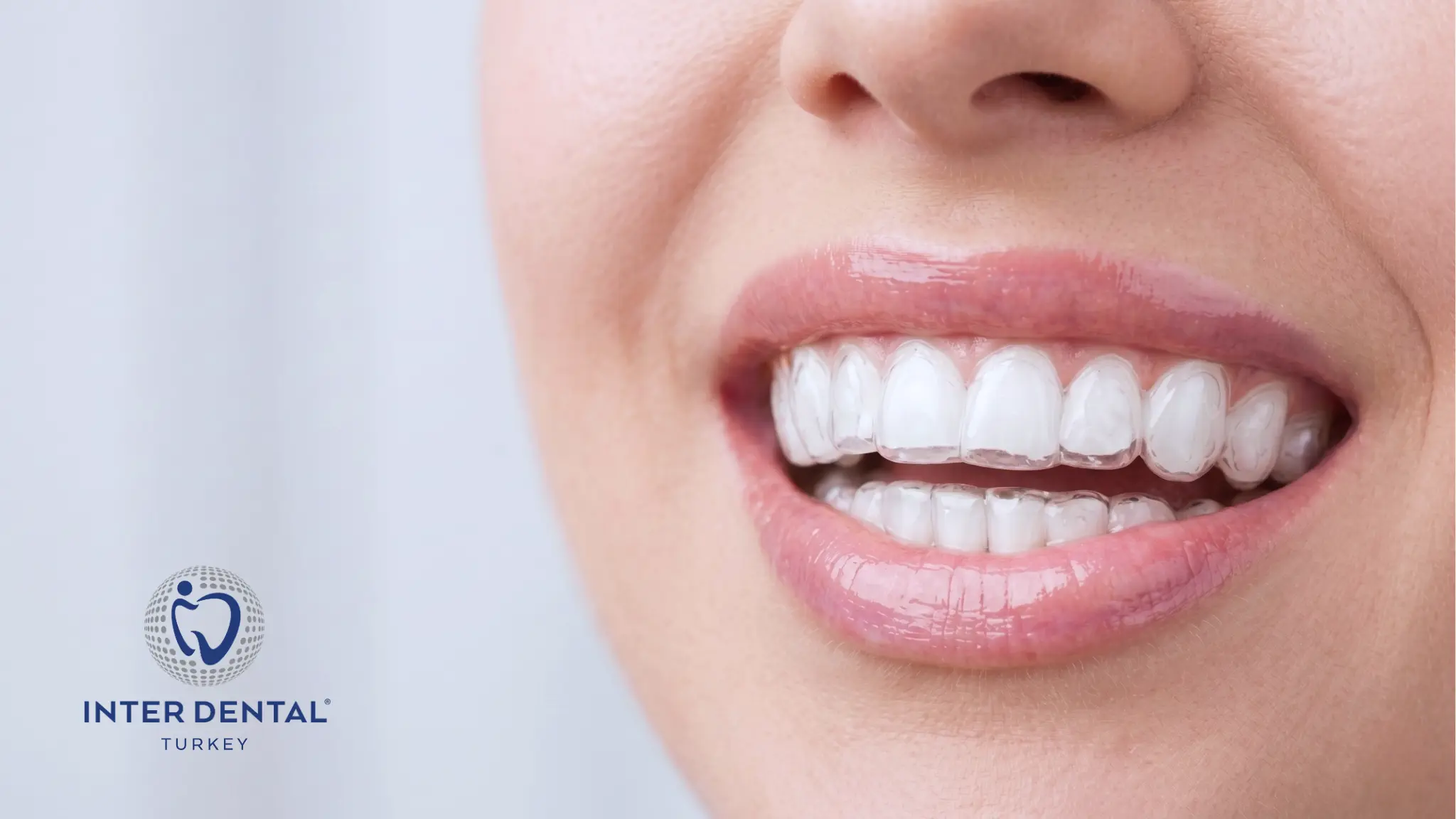
With the advancement of digital dentistry, a true revolution has taken place in orthodontic treatments. We no longer have to live with metal braces for years just to achieve a perfectly straight and aesthetic smile. The leading star of this revolution is clear aligner (Invisalign) treatments.
At Inter Dental Turkey, we have put under the microscope the 5 common myths about Invisalign treatment that we frequently encounter in our clinic and that often confuse our patients.
MYTH 1: "Clear Aligners Can Only Fix Minor Crooked Teeth"
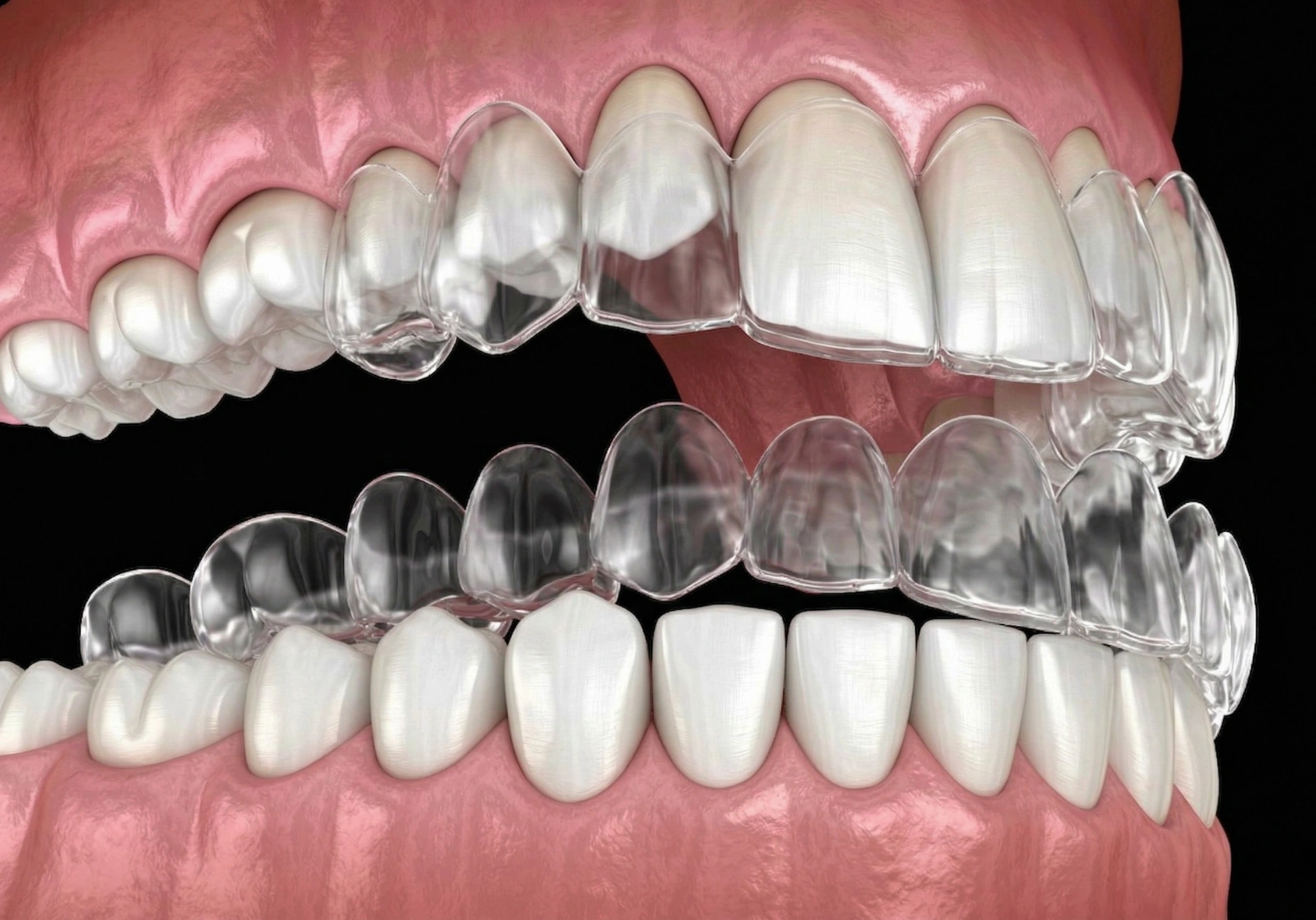
In the past, it was thought that clear aligners were only suitable for mild aesthetic irregularities. In today's technology, however, this is a complete myth.
Thanks to advanced three-dimensional (3D) modeling software and the patented smart materials used in the production of the aligners, Invisalign can successfully treat not just simple crowding, but much more.
Which Complex Cases Can Clear Aligners Solve?
- Overbite: When the upper front teeth overlap the lower front teeth excessively.
- Underbite: When the lower teeth protrude past the upper front teeth.
- Crossbite & Diastema: Misalignment of the dental arches and wide gaps between the teeth.
Because digital treatment planning is carried out milimetrically by a specialist doctor in a computer environment, the movements of your teeth are highly predictable.
MYTH 2: "Invisalign Treatment is a Very Painful Process"
THE FACT: One of the most common questions our patients ask is: "Does Invisalign hurt?"
Clear aligner treatment is significantly more comfortable compared to traditional metal braces. There are no sharp brackets or wires that scratch, bleed, or irritate the inner cheeks and lips.
Every time you switch to a new set of aligners (usually every 1-2 weeks), a light pressure is applied to guide the teeth. This pressure is an indicator that the treatment is actively working and usually consists of a mild sensitivity felt only within the first 24-48 hours. This sensation certainly cannot be described as "unbearable pain" and fades away quickly.
MYTH 3: "Clear Aligners Cause a Lisp and Ruin My Speech"
THE FACT: Whenever a new appliance is placed in your mouth, your tongue needs a short period of time to get used to it. Although clear aligners are thin enough to tightly wrap your teeth, you might notice a slight difference in your pronunciation (especially with "s" and "sh" sounds) on the very first day you wear them.
However, this situation is entirely temporary. Your tongue and oral muscles will fully adapt to this new environment within 1 to 3 days, and your speech will return to 100% normal. Professionals, teachers, or managers who play an active role in business life overcome this adaptation process seamlessly.
MYTH 4: "Cleaning and Maintaining the Aligners is Very Difficult"
THE FACT: On the contrary, when compared to trying to clean food trapped between fixed metal wires, maintaining clear aligners is incredibly easy and practical. Since you remove your aligners while eating, you have zero food restrictions (you can eat whatever you want!), and brushing and flossing your teeth afterward is effortless.
Step-by-Step How to Clean Invisalign
MYTH 5: "Treatment Takes Much Longer Than Traditional Braces"
THE FACT: Patients tend to think that a removable appliance will work slower than fixed braces. So, what are the actual disadvantages of clear aligners compared to traditional braces?
The only "disadvantage" of clear aligners is that it strictly relies on the patient's discipline and compliance. Provided that the aligners are worn for the recommended duration daily (20-22 hours), the treatment time is NOT longer than braces.
In fact, in many cases, because an individualized movement plan is digitally mapped out for each tooth, Invisalign treatment provides results faster than conventional orthodontic treatments. Success entirely depends on the patient taking responsibility for wearing the aligners regularly.


