
An anti-snoring appliance (mandibular advancement device) gently holds your lower jaw slightly forward while you sleep, keeping your airway more open. It is custom-fitted by a dentist in a single visit, needs no electricity or mask, and works best for simple snoring and mild-to-moderate obstructive sleep apnea — not as a substitute for CPAP in severe cases.
Why Do You Snore in the First Place?
Snoring happens when air struggles to move freely through your nose and throat while you sleep. As your throat muscles relax, the soft tissue at the back of your mouth — your soft palate, tongue base and uvula — can partially block the airway. Air pushes through the narrowed space, and the surrounding tissue vibrates. That vibration is the sound you hear.
Common contributors include:
- Jaw and tongue position: a jaw that naturally sits further back lets the tongue fall toward the throat during sleep.
- Sleeping on your back: gravity pulls the tongue and soft tissue backward, narrowing the airway.
- Weight and neck size: extra tissue around the neck and throat adds pressure on the airway.
- Alcohol and sedatives: these relax throat muscles more than usual, making vibration more likely.
- Nasal congestion or a deviated septum: when breathing through the nose is harder, mouth breathing increases and snoring often gets louder.
- Age: muscle tone in the throat naturally decreases over the years, which is why snoring often becomes more noticeable with age.
For most people, snoring is harmless to their own health but disruptive to sleep quality — theirs and their partner’s. In some cases, though, snoring is a sign of obstructive sleep apnea (OSA), where the airway briefly closes and breathing actually stops for seconds at a time. That distinction matters, because it changes which treatment is appropriate.
What Is an Anti-Snoring Appliance?
An anti-snoring appliance — also called a mandibular advancement device (MAD) or mandibular advancement splint (MAS) — is a custom-made oral device that fits over your upper and lower teeth, similar to a retainer or a slim mouthguard. Its job is simple: hold your lower jaw (mandible) in a slightly forward position while you sleep.
Moving the jaw forward pulls the tongue and surrounding soft tissue away from the back of the throat, which keeps more space open for air to pass through. Less obstruction means less vibration, and less vibration means quieter — or no — snoring.
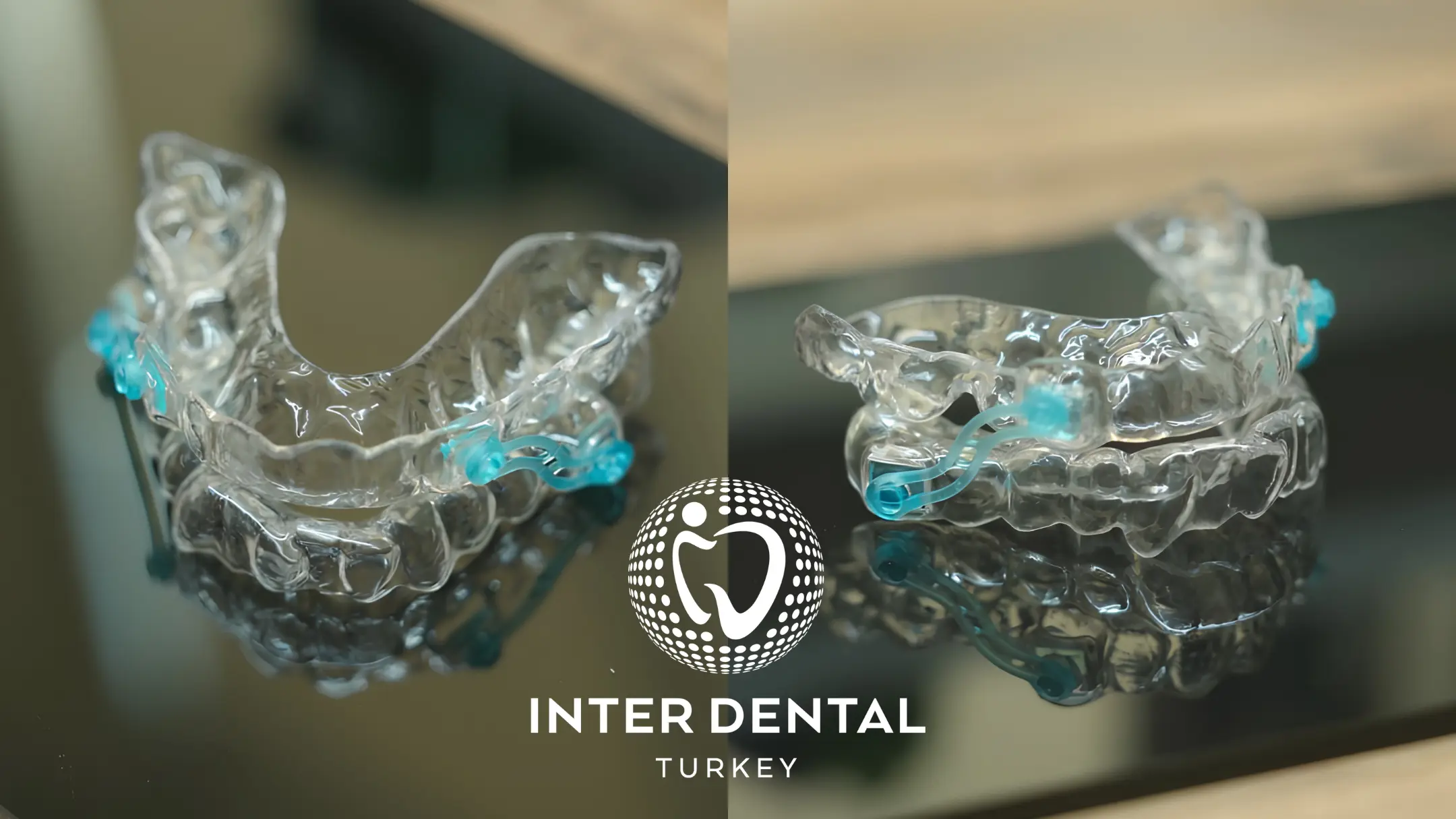
Unlike generic “boil and bite” mouthguards sold over the counter, a dentist-fitted appliance is built from a mold or digital scan of your own teeth and jaw. That custom fit is what makes it comfortable enough to actually wear every night, and precise enough to advance the jaw the right amount — not too little to be effective, not so much that it strains your jaw joint.
How Does It Work, Step by Step?
Many devices are also titratable, meaning the amount of jaw advancement can be adjusted gradually over the following weeks until snoring is controlled with the least advancement necessary — which also means less strain on the jaw.
Who Actually Benefits From One?
An anti-snoring appliance tends to work best for:
- People with simple (primary) snoring who do not have sleep apnea.
- People diagnosed with mild-to-moderate obstructive sleep apnea, especially if they cannot tolerate a CPAP machine.
- People whose snoring is worse when sleeping on their back or after alcohol.
- Travelers who want a compact, mask-free, power-free alternative to CPAP.
When an Oral Appliance Is Usually Not the First-Line Option
- Severe obstructive sleep apnea confirmed by a sleep study.
- Significant jaw joint (TMJ) problems that a dentist needs to evaluate first.
- Very few remaining natural teeth to anchor the device securely.
- Active gum disease that needs treatment before any oral appliance is fitted.
A proper diagnosis — ideally including a sleep study for anyone with suspected apnea — is what determines whether an oral appliance is appropriate or whether CPAP or another treatment is safer.
Anti-Snoring Appliance vs. CPAP: What Is the Difference?
CPAP (continuous positive airway pressure) is the gold-standard treatment for moderate-to-severe sleep apnea. It uses a mask connected to a machine that gently pumps air to keep the airway open all night. It is highly effective, but many people find the mask, noise and need for a power source hard to live with long-term — studies consistently show lower adherence rates for CPAP than for oral appliances.
Anti-Snoring Appliance (MAD)
Best for simple snoring and mild-to-moderate OSA. Generally higher comfort and adherence — no mask, no noise, no electricity, and compact enough to travel with. Custom-made by a dentist in a single visit.
CPAP
Best for moderate-to-severe OSA. Highly effective but often harder to tolerate long-term. Requires a machine, mask and power source; prescribed and titrated by a sleep physician.
| Criteria | Anti-Snoring Appliance | CPAP |
|---|---|---|
| Best for | Simple snoring, mild-to-moderate OSA | Moderate-to-severe OSA |
| Comfort / adherence | Generally higher — no mask or noise | Highly effective but often harder to tolerate |
| Setup | No electricity, compact for travel | Requires a machine and power source |
| Fitting | Custom-made by a dentist | Prescribed and titrated by a sleep physician |
| Adjustment period | 1–2 weeks typically | Varies, often longer to tolerate |
For many patients, the honest answer is that the two are not strictly competitors — the right choice depends on the severity of the sleep apnea, confirmed by a sleep study, and how well you tolerate each option. According to the American Academy of Dental Sleep Medicine, oral appliance therapy is a recognised first-line treatment for primary snoring and an effective option for patients with mild-to-moderate OSA who prefer it over CPAP or cannot tolerate CPAP.
What Should You Expect in the First Few Weeks?
- Mild jaw or tooth soreness for the first several nights as your muscles adjust — this typically settles down.
- Excess saliva or a dry mouth initially, which usually improves once you are used to sleeping with the appliance.
- A slightly different bite in the morning for the first few minutes after removing the device — this is normal and temporary in most cases, but should be mentioned to your dentist if it lingers.
- Noticeably quieter nights reported by partners, often within the first week or two.
Regular check-ins with your dentist — typically at a few weeks, then periodically after — help confirm the fit is still correct and that jaw comfort stays on track over months of use.
Real Patient Scenarios: Is an Oral Appliance Right for You?
There is no single answer that fits everyone. Here is how the right approach typically differs by situation:
| Patient | Situation | Typical Approach | Reasoning |
|---|---|---|---|
| A | Occasional snoring, worse after wine or sleeping on the back | Anti-snoring appliance | Simple, positional snoring responds well to jaw advancement without needing a sleep study first in most cases |
| B | Loud nightly snoring, partner reports pauses in breathing | Sleep study first, then appliance if mild-to-moderate OSA | Witnessed breathing pauses need a proper diagnosis before choosing a device |
| C | Diagnosed severe OSA, already using CPAP but struggling with the mask | Discuss combination therapy with a sleep physician | Severe OSA usually needs CPAP as the primary treatment; an appliance may only be considered as directed by a specialist |
| D | Frequent traveler who wants a compact, mask-free option | Anti-snoring appliance | No power source or machine needed, easy to pack and use anywhere |
| E | Existing TMJ (jaw joint) discomfort | Dental evaluation before fitting | Jaw advancement can aggravate TMJ issues if not assessed and monitored properly first |
Caring for Your Appliance
- Rinse it with cool water after each use; avoid hot water, which can warp the material.
- Brush it gently with a soft toothbrush (no toothpaste, which can be abrasive) or use a dedicated cleaning tablet.
- Store it in its ventilated case when not in use — never wrapped in tissue or a pocket, where it can get damaged or lost.
- Bring it to dental check-ups so your dentist can inspect for wear and confirm the fit is holding up.
- Expect to replace it every two to three years, depending on the material and how well it is cared for.
Getting an Anti-Snoring Appliance at Inter Dental Turkey
At Inter Dental Turkey, the process is kept simple and precise: an assessment of your bite and jaw, a digital scan or impression, and a custom-fitted appliance built specifically for your anatomy — with fitting and adjustments completed in a single visit, so you leave with a device that is ready to use, not one you have to “get used to” over months of trial and error.
Learn more about the treatment here: Anti-Snoring Appliance in Antalya.


