

What Is Dry Mouth?
Dry mouth (xerostomia) is a persistent feeling of dryness in the mouth caused by salivary glands not producing enough saliva or by reduced saliva quality In this guide, we answer the most searched questions in one place: causes of dry mouth, symptoms, treatment, what causes dry mouth, which condition dry mouth can be a sign of, why dry mouth and nausea occur together, and tongue dryness
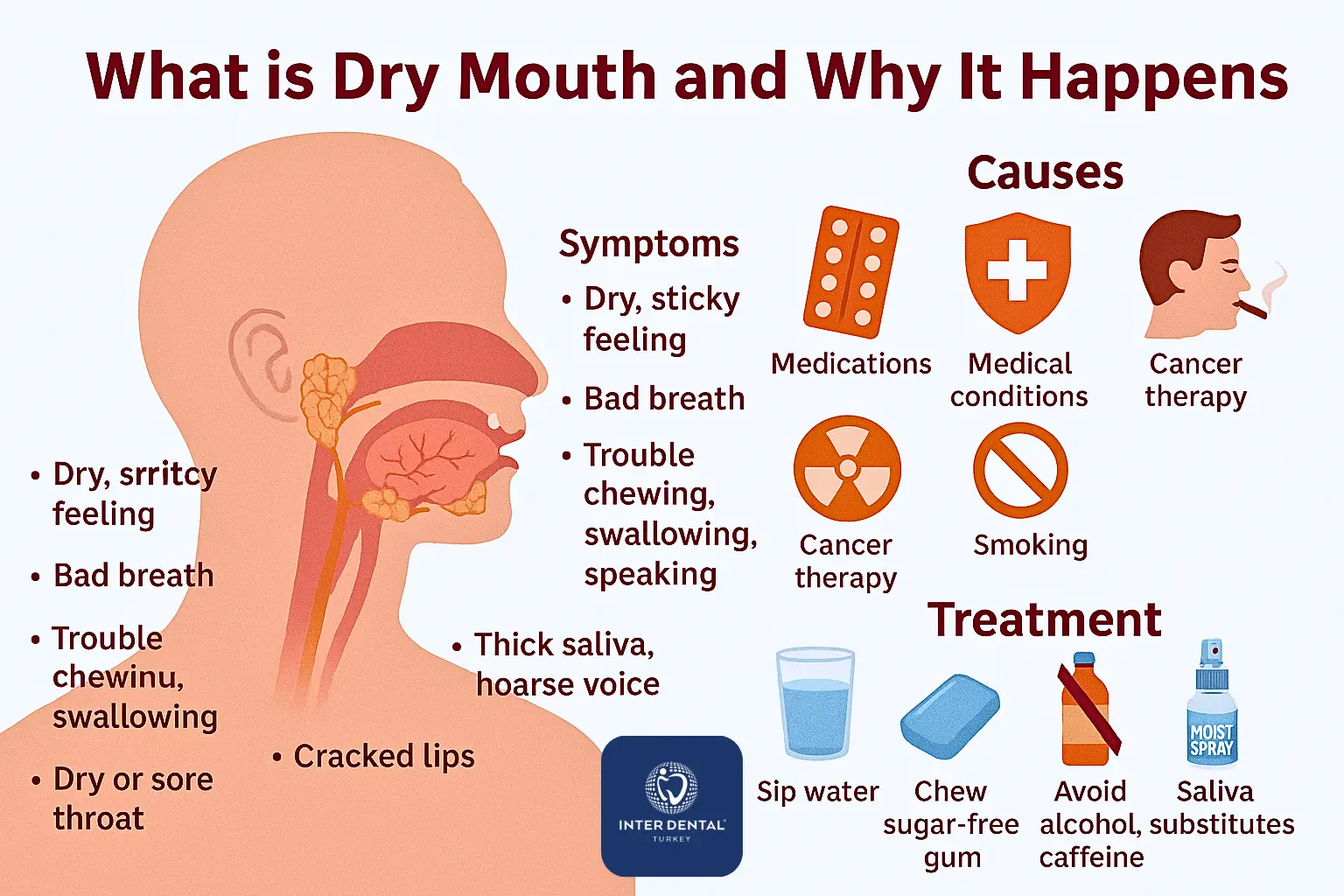
Quick Answer: What Causes Dry Mouth?
The most common causes include
- Medications (antidepressants, antihistamines, blood pressure medicines and others)
- Not drinking enough water or dehydration
- Mouth breathing (nasal congestion, snoring)
- Smoking, alcohol, too much caffeine
- Stress and anxiety
- Some conditions such as diabetes and Sjögren syndrome
- Chemotherapy or head and neck radiotherapy
What Are the Symptoms of Dry Mouth?
Symptoms can vary, the most common complaints are
- A constant dry mouth feeling especially at night or in the morning
- Throat dryness and difficulty swallowing
- Tongue dryness and a burning or cracked feeling on the tongue
- Sticky saliva that feels thick or stringy
- Bad breath
- Reduced or altered sense of taste
- Cracked lips and sores at the corners of the mouth
- Faster cavity formation and gum problems
The complaint my mouth gets extremely dry at night is often linked to mouth breathing or medication effects
Dry Mouth Causes (Detailed)
1) Medications
The most common cause of dry mouth is medication Cold and allergy medicines, antidepressants, some blood pressure medicines, and muscle relaxants can reduce saliva flow
2) Mouth breathing
A very common answer to the question what causes mouth dryness is
- Nasal congestion, allergies, deviated septum
- Snoring or suspected sleep apnea
- Sleeping with the mouth open
3) Dehydration and lifestyle
Drinking too little water, too much coffee or tea, alcohol, smoking, and salty or spicy foods can make dryness worse
4) Medical conditions
- Diabetes
- Sjögren syndrome (dry mouth and dry eyes are common)
- Some neurological conditions
- Thyroid or metabolic issues
5) Cancer treatments
Chemotherapy and head and neck radiotherapy can affect the salivary glands
What Condition Can Dry Mouth Be a Symptom Of?
Dry mouth alone is not a diagnosis, but it should be evaluated if it comes with
- Frequent urination + excessive thirst + fatigue → possible diabetes
- Dry eyes + joint pain → autoimmune conditions such as Sjögren syndrome
- Snoring at night, breathing pauses, morning headaches → sleep apnea or mouth breathing
- If dryness lasts longer than 2 to 3 weeks
- If burning and sores on the tongue or cheeks are getting worse
- If cavities are forming quickly
- If bad breath and swallowing difficulty are noticeable
Why Do Dry Mouth and Nausea Happen Together?
These two complaints can occur together. The most common scenarios are
- Dehydration especially if you are drinking too little water
- Reflux throat irritation and a dry mouth feeling
- Medication side effects
- Stress or anxiety can come with loss of appetite and nausea
If nausea happens frequently or you have weight loss or severe burning, a medical evaluation is recommended
How Is Dry Mouth Treated?
Treatment is planned based on the underlying cause
1) Treating the cause
- If medication related, discuss alternatives with your doctor
- If nasal congestion or mouth breathing is present, address the cause
- Improve control of conditions such as diabetes
2) Products that support saliva
- Artificial saliva (spray, gel)
- Alcohol free mouthwash
- Sugar free gum or lozenges (stimulate saliva reflex)
3) Protecting oral and dental health
- Regular dental check ups
- Fluoride support when needed
- A personalized care plan for gum and cavity risk
What Helps Dry Mouth? (At Home)
- Drink small amounts of water frequently throughout the day
- Sugar free gum or lozenges
- Use a room humidifier at night
- Avoid smoking and alcohol
- Reduce highly caffeinated drinks
- If you breathe through your mouth, assess nasal congestion
- Suck on ice chips (can help some people)
- Choose alcohol free oral care products
What Causes Tongue Dryness?
Tongue dryness can be part of dry mouth. It can also increase due to dehydration, mouth breathing, certain medications, reflux, and stress If burning or cracking on the tongue is noticeable and lasts long, it is a good idea to get it evaluated
What Can We Do at Inter Dental Turkey?
For dry mouth complaints, we assess cavity and gum risk, and check the tongue and oral tissues for irritation during an oral examination If needed, we provide preventive care and create a personalized oral care plan


