
This article is for general information and does not replace a dental exam. If a painful tooth comes with facial swelling, fever, pus, trouble swallowing, or difficulty breathing, seek urgent dental or medical care immediately.
30-second quick check: save it or remove it?
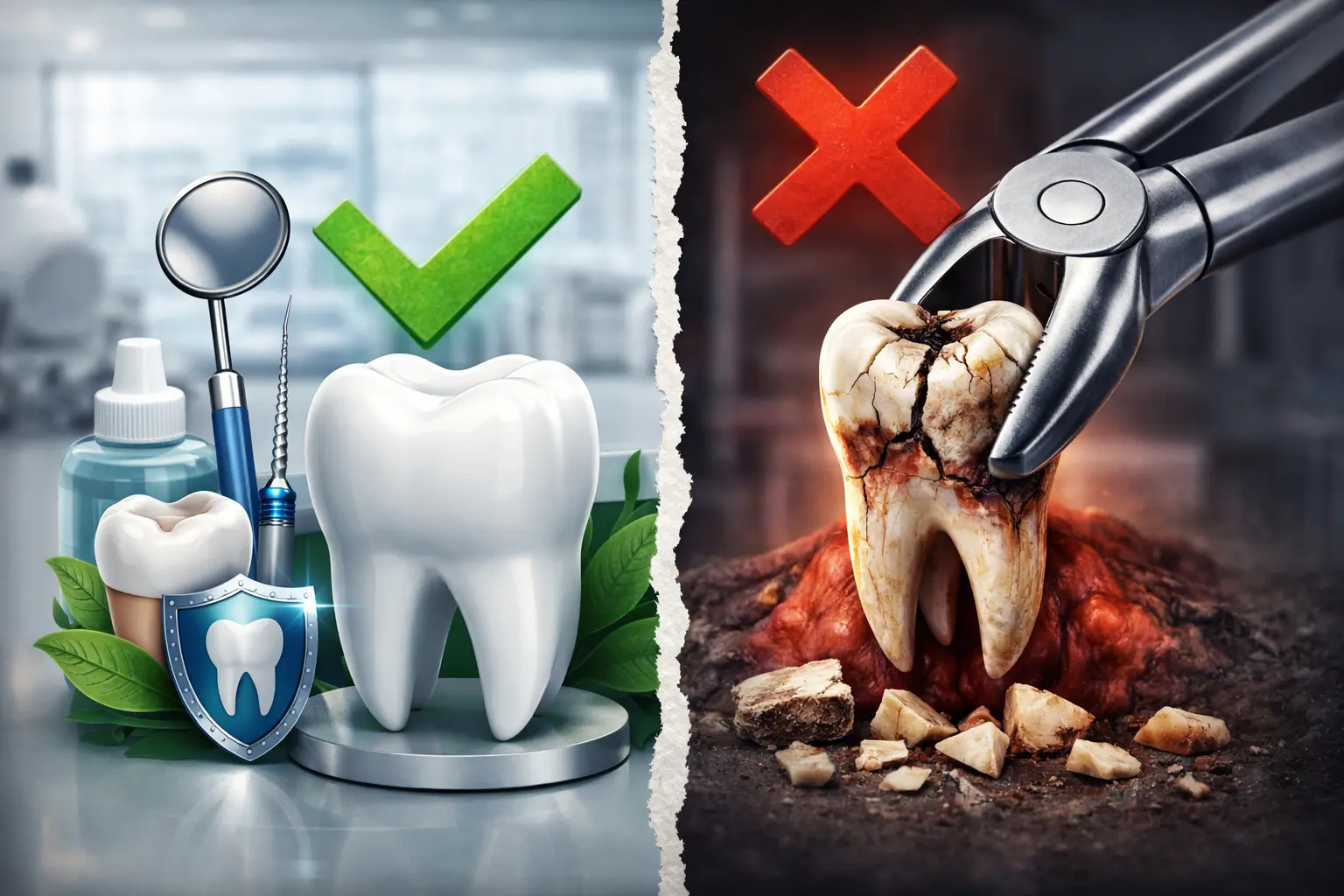
- Many damaged teeth can still be saved: deep decay, infection, or pain do not automatically mean extraction.
- Dentists usually try to preserve the natural tooth first: especially if the root, surrounding bone, and remaining structure still make the tooth restorable.
- Extraction becomes more likely when the tooth is no longer predictably restorable: for example, if a crack extends too far, too much tooth has been lost, or gum and bone support are severely compromised.
- The final decision depends on long-term prognosis: not just whether the tooth hurts today, but whether it can function well after treatment.
Quick answer: not every damaged tooth needs to be pulled
People often assume that severe pain, a deep cavity, or an abscess automatically means the tooth has to come out. In reality, that is not how treatment decisions are usually made. Dentists first look at whether the tooth can still be saved in a predictable way. If the answer is yes, treatment may involve a filling, root canal treatment, a crown, gum therapy, or a combination of these.
Extraction becomes more likely when the tooth is no longer repairable in a stable, long-term way. That might mean there is too little healthy tooth left, the crack extends in an unfavorable direction, the root is compromised, or the surrounding bone and gum support have deteriorated too much.
What dentists look at before recommending extraction
The decision is rarely based on one single factor. Dentists usually combine the clinical exam, X-rays, symptoms, and restorability of the tooth before deciding what makes the most sense.
A tooth may still be salvageable if there is enough sound structure to support a filling or crown. But if too much of the crown has broken down, there may not be enough left to restore predictably.
A small crack above the gumline is very different from a split tooth or a vertical root fracture. The deeper and more unfavorable the crack, the worse the prognosis usually becomes.
If the pulp is infected but the tooth is otherwise restorable, root canal treatment may still save it. A dead nerve does not automatically mean the tooth is lost.
A tooth with advanced mobility or major periodontal bone loss may become difficult to keep long term, even if the crown itself looks repairable.
The question is not only “Can we treat this tooth?” but also “Will this tooth still work well after treatment for years, not just weeks?”
When a tooth can often be saved
There are many situations where a tooth may look alarming but can still be treated successfully. A painful tooth can often be saved when the surrounding bone is still reasonable, the crack has not destroyed the root, and enough structure remains to restore the tooth afterward.
This often sounds worse than it is. If the tooth can still be rebuilt afterward, root canal treatment may allow it to stay in place.
An infection around the root tip does not automatically mean extraction. In many cases, treating the infection source can still save the tooth.
If the crack has not split the tooth or extended too far below the gumline, treatment and proper protection with a crown may still work well.
A tooth that has had large fillings before is not automatically hopeless. The key is whether it can still be rebuilt in a stable way.
Not every mobile or inflamed tooth has to be removed. Sometimes gum treatment improves the prognosis enough to keep the tooth longer.
If your symptoms are more about short, sharp sensitivity than obvious infection, this guide may also help: Sensitive Tooth or Cavity? 8 Signs.
When extraction is more likely
Some teeth simply do not have a reliable long-term future. In those cases, removing the tooth may be the more realistic and safer option, especially if trying to save it would only delay the inevitable.
If decay or breakage has destroyed too much of the crown, even a root canal may not help because there is nothing reliable left to restore.
A deep split or root fracture often means the tooth cannot be predictably saved.
If the supporting structures are badly compromised, the tooth may not remain functional even if the crown is repaired.
If previous treatment has failed and the remaining options are weak or short-lived, extraction may be more sensible than repeated temporary fixes. In some cases, this may overlap with situations covered in Failed Root Canal: Signs, Causes & Best Solutions.
Some fractures and severe injuries leave no stable way to restore the tooth for function and comfort.
Root canal vs extraction: what changes after the tooth is removed?
This is one of the most important parts of the decision. Extraction may remove pain and infection, but it also creates a gap unless that tooth is replaced. Depending on where the tooth is, the next step may involve an implant, a bridge, or sometimes orthodontic or prosthetic planning.
Saving the tooth, when possible, often means keeping your natural bite and avoiding additional replacement treatment. That is why dentists usually start by asking whether the natural tooth still has a reasonable chance of long-term survival.
If you are also dealing with ongoing gum discomfort around the area, you may find this helpful: What Helps With Gum Pain?.
Questions to ask before agreeing to extraction
If you have been told that a tooth may need to come out, it helps to ask a few clear questions. This does not mean challenging the diagnosis. It means understanding the prognosis properly.
- How much healthy tooth structure is still left?
- Could this tooth be saved with a root canal, crown, or other treatment?
- If there is a crack, how deep is it?
- How good is the long-term prognosis if we try to save it?
- If extraction is recommended, what would replace the tooth afterward?
- Would trying to save it be reasonable, or would that only delay inevitable extraction?
What if the tooth is swollen or infected right now?
A tooth can still be salvageable even when it hurts badly. But severe infection changes the urgency. If the area is swollen, draining, or making it difficult to chew, open your mouth, swallow, or breathe, it should be assessed quickly.
Seek urgent same-day care if you have:
- Facial swelling
- Fever
- Pus or a bad taste coming from the area
- Rapidly worsening pain
- Trouble opening your mouth, swallowing, or breathing
Book an appointment via Contact / Appointment.
Quick summary (save this checklist)
- Many painful, cracked, or infected teeth can still be saved.
- The main question is whether the tooth is predictably restorable long term.
- Extraction is more likely when there is too little healthy tooth left, an unfavorable crack, or severe loss of support.
- If there is swelling, fever, pus, or trouble swallowing, do not delay assessment.


