Need Fast Advice?
Message us with your symptoms and we’ll help you plan the right next step.
Message on WhatsApp Contact / AppointmentQuick Answer: Why Does a Tooth Hurt After a Filling?
Tooth pain after a filling is usually caused by temporary nerve irritation or a bite that feels “too high.” Most mild sensitivity improves within 2–7 days. However, sharp pain when biting, night throbbing, or pain that gets worse can indicate a high filling, a micro-leak, or pulp inflammation.
Is It Normal for a Tooth to Hurt After a Filling?
Yes. During a filling, the tooth is exposed to air, light and restorative materials. This can temporarily irritate the nerve and make the tooth feel sensitive to pressure or temperature.
In many cases, discomfort fades within a few days. If you still have notable pain after 7–10 days or the pain is getting worse, it’s best to have the bite and the filling seal checked.
Sharp Pain When Biting After a Filling: What It Usually Means
Pain when chewing is one of the most common post-filling complaints. The top causes are:
- High filling (bite interference): Even a tiny “high spot” can create intense pressure when you bite.
- Cracked tooth or stressed enamel: A deep cavity can weaken the tooth; biting pain may appear after treatment.
- Inflamed pulp: If the decay was deep, the nerve can stay irritated and react strongly to pressure.
A quick bite adjustment often resolves high-filling pain fast. If pain persists, your dentist may test the tooth and take an X-ray.
Common Reasons a Filled Tooth Can Hurt
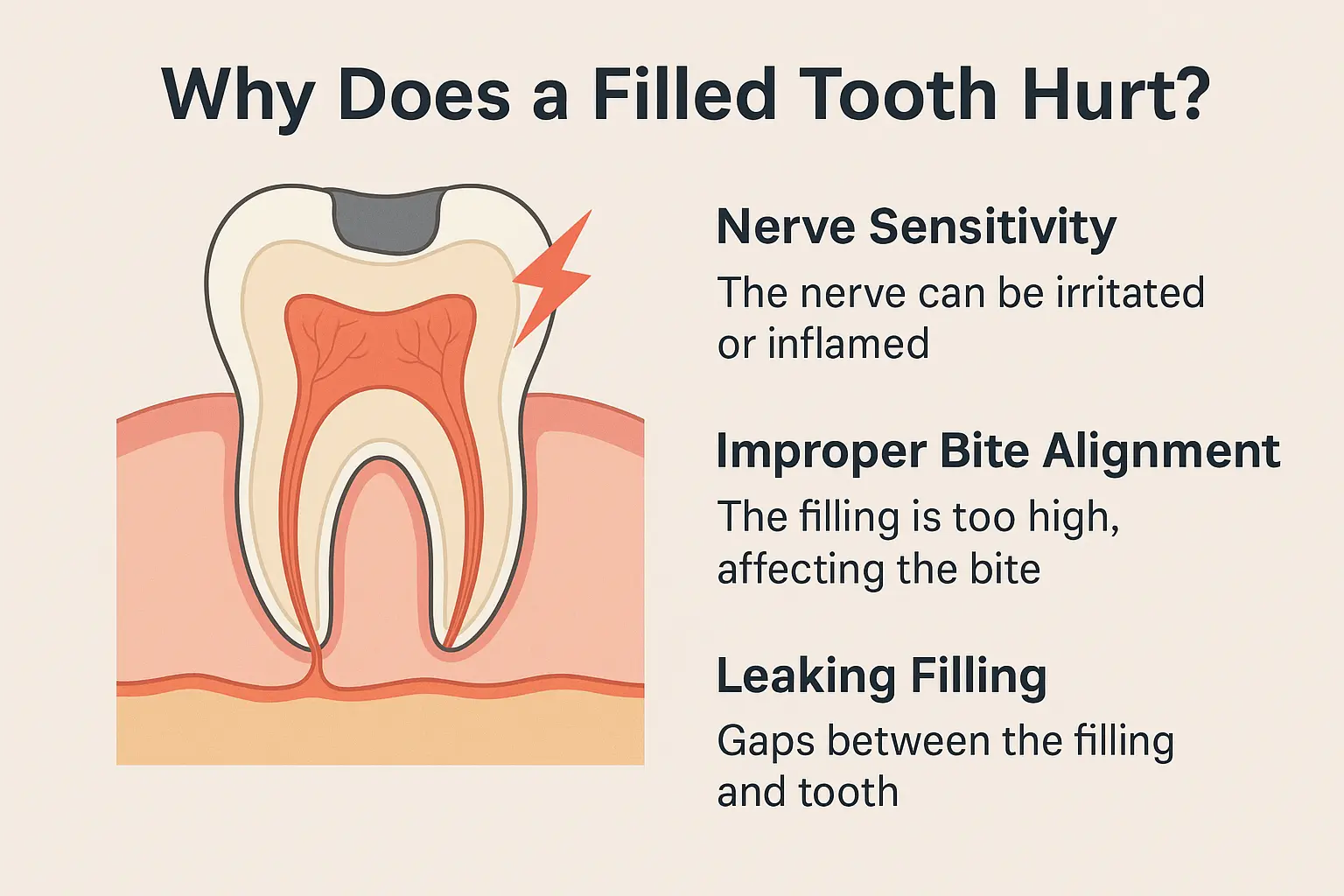
- Nerve irritation: The tooth’s inner tissue (pulp) can react to drilling and filling materials.
- High filling level: If the filling sits slightly above the natural tooth surface, chewing pressure triggers pain.
- Micro-leak / leaking filling: Tiny gaps can let bacteria or fluids in, causing sensitivity or sharp pain.
- Deep decay or infection: If decay reached the nerve, root canal treatment may be needed.
- Old or cracked fillings: Worn fillings can break down and cause renewed pain or sensitivity.
Home Relief Tips (Safe, Short-Term)
1) Cold compress
Apply a cold pack to the cheek for 10–15 minutes to reduce inflammation and numb discomfort.
2) Desensitising toothpaste
Use a toothpaste for sensitive teeth twice daily for a few days to help calm nerve signals.
3) Avoid extreme temperatures
Very hot or cold drinks can trigger sensitivity in the first days after treatment.
4) Choose soft foods for 24–48 hours
Hard or sticky foods may stress a new filling and can worsen bite-related pain.
5) Warm salt-water rinse
Gently rinse with warm salt water to soothe surrounding gums and reduce bacterial load.
6) Pain relief (if suitable for you)
Over-the-counter options like ibuprofen or paracetamol may help short-term. If you need painkillers for several days or pain worsens, get examined.
Urgent Warning Signs (Don’t Wait)
Book an urgent dental exam if you notice any of the following:
- Throbbing pain that wakes you at night
- Swelling of the gum/face or a bad taste/drainage
- Severe lingering cold/hot pain (lasting more than 30–60 seconds)
- Pain that keeps getting worse after day 3–4
When to See a Dentist
If pain lasts longer than a week, is sharp on biting, or feels like pressure inside the tooth, you may need:
- A quick bite adjustment (high filling)
- A filling repair/replacement (leak or crack)
- Evaluation for pulp inflammation or root canal therapy
Early treatment prevents bigger problems and often saves the tooth.
Related guide: How to Recognize a Failed Root Canal Treatment? | Signs & Solutions
Conclusion
Mild sensitivity after a filling can be normal, but pain that persists, worsens, or appears mainly when biting usually means the tooth needs a quick check. If you’re asking “Why does my tooth hurt after a filling?”, the safest step is to have the bite and the filling seal evaluated.
If you’d like, our team can help you with a quick assessment. Feel free to contact us or message us on WhatsApp. (We can also provide a free check-up and X-ray based on clinical suitability.)
Frequently Asked Questions (Tooth Pain After Filling)
How long is sensitivity normal after a filling?
Mild sensitivity often improves within 2–7 days. If symptoms persist beyond 7–10 days or worsen, your dentist should check the bite and the filling’s seal.
Why do I have sharp pain when biting after a filling?
The most common cause is a high filling (a small “high spot” that hits first when you bite). A quick adjustment usually solves it. If pain continues, a crack or pulp inflammation may need evaluation.
What does a high filling feel like?
It often feels like your teeth don’t meet evenly, or one tooth hits first. You may feel pressure pain on chewing, especially on one side. Dentists can smooth the bite in minutes.
Can a filling leak and cause pain?
Yes. A tiny gap (micro-leak) can let fluids or bacteria in, leading to cold sensitivity, sharp pain, or a dull ache. The solution is usually to repair or replace the filling.
Is pain weeks after a filling normal?
It can happen, but it’s not something to ignore. Lingering pain weeks later may indicate a bite issue, micro-leak, or deeper nerve irritation. A dental exam and X-ray help identify the cause.
Is pain after a temporary filling normal?
Mild sensitivity can be normal. Persistent or worsening pain may signal infection, a bite problem, or nerve inflammation—get checked if it doesn’t improve.
When do I need a root canal after a filling?
If you have night throbbing, swelling, or severe lingering hot/cold pain, the pulp may be inflamed or infected. Your dentist will confirm with tests and X-rays and recommend the right treatment.
Related Posts
More guides that may support your next step.