White Spots on Teeth: Quick Answer (Can They Be Removed?)
Yes — in many cases, white spots on teeth can be reduced, blended, or masked. The best option depends on the cause: early “white spot lesions” from mineral loss often respond to remineralisation or resin infiltration (ICON®), while deeper developmental spots may need microabrasion, bonding, or veneers.
What Are White Spots on Teeth?
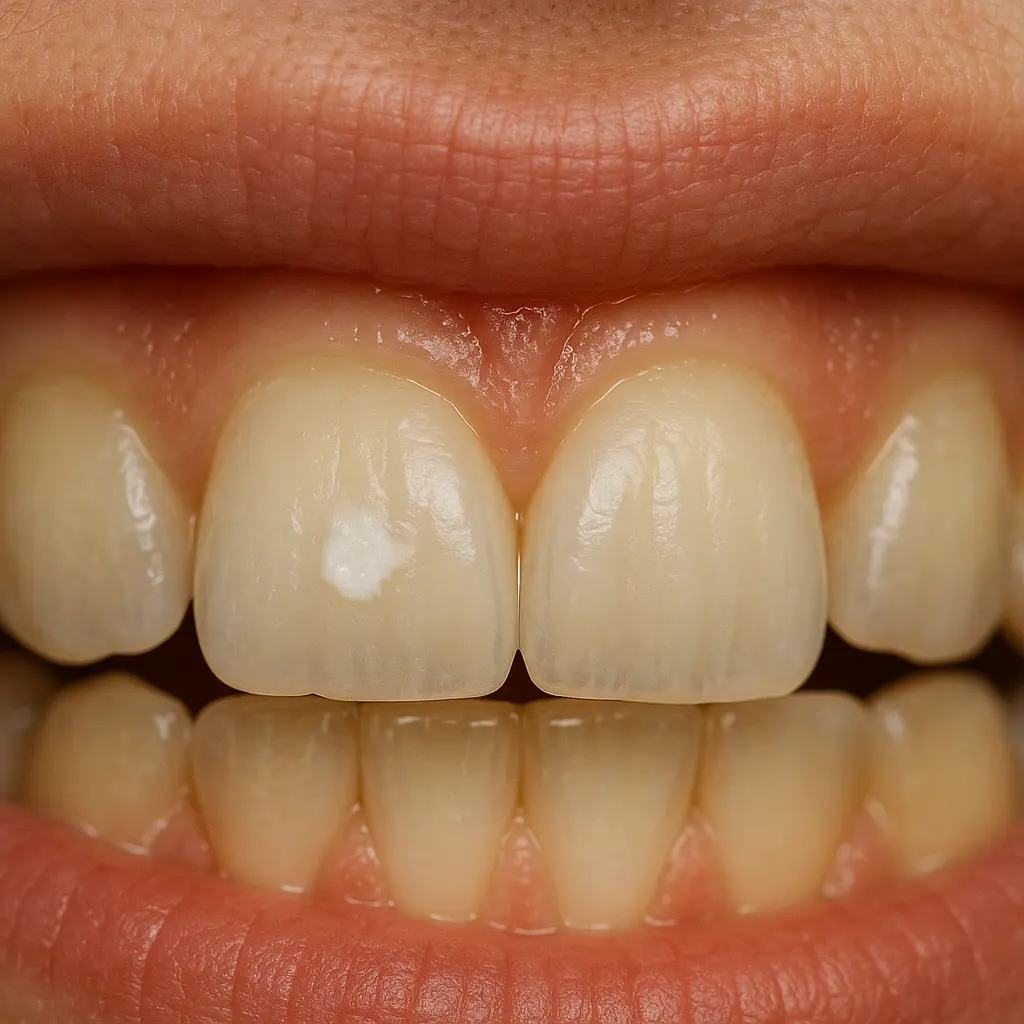
White spots are areas of enamel that reflect light differently than healthy enamel. Some are caused by demineralisation (early mineral loss) and can be an early stage of decay. Others are related to development (for example, fluorosis from excess fluoride exposure in childhood), or enamel formation issues (hypomineralisation/hypoplasia).
In other words: some white spots are mainly cosmetic, while others are an early warning sign that enamel needs attention.
What Causes White Spots on Teeth?
These are the most common causes, starting with the ones we see most often:
- Demineralisation (early enamel mineral loss): plaque acids pull minerals out of enamel, leaving chalky spots (often near the gumline). This is frequently linked to hygiene challenges and sugar frequency.
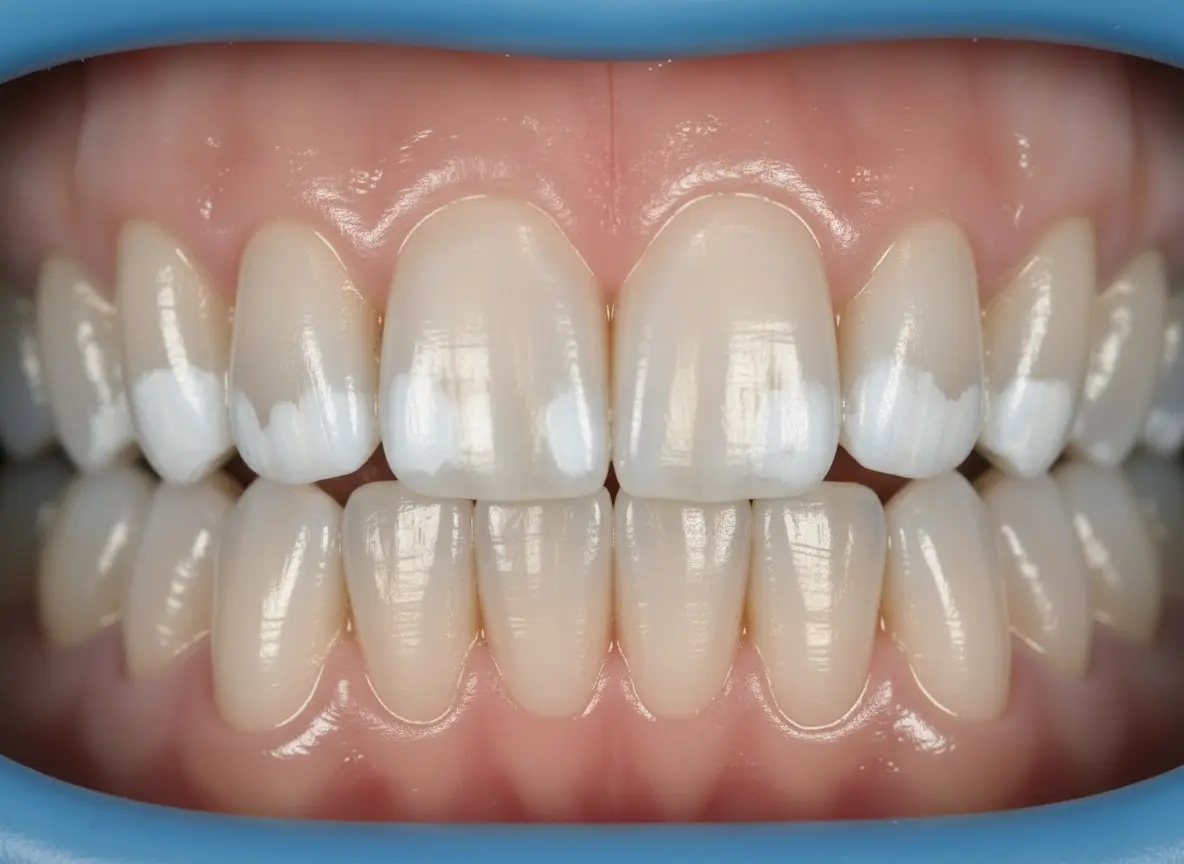
- After orthodontic treatment (braces/aligners): plaque can build up around brackets, increasing the risk of white spot lesions if cleaning is difficult.
- Dental fluorosis (childhood): excess fluoride while enamel is forming can cause diffuse white streaks or patches that appear across multiple teeth.
- Diet acids + dry mouth: frequent acidic drinks/snacks and low saliva can make enamel look chalky and more vulnerable.
- Developmental or genetic enamel differences: some spots are “built-in” from childhood illnesses, nutrition issues, or enamel formation variations.
- Trauma to baby teeth: injury in early childhood can sometimes affect enamel formation in the permanent tooth underneath.
White Spots After Braces: Why It Happens
Braces create plaque-retentive areas around brackets and along the gumline. If plaque stays on the enamel, acids can cause demineralisation, leaving chalky white areas (white spot lesions). This is a known risk during orthodontic treatment, especially if brushing and flossing are inconsistent.
How to Tell What Type of White Spot You Have
Are White Spots on Teeth a Cavity?
Sometimes. A white spot can be an early enamel lesion (the first stage before a visible cavity forms), but not every white spot is decay. Fluorosis and developmental enamel changes can also look white. The location, texture, sensitivity, and history (for example braces) help your dentist tell the difference.
- After braces: spots often sit around where brackets were and near the gumline.
- Fluorosis: usually looks more diffuse and affects multiple teeth in a similar way.
- Early decay-type spots: can look chalky, may feel rough, and may be sensitive.
- Developmental spots: often present since childhood and don’t “move” or change quickly.
White Spots on Teeth Treatment: What Actually Works
1) Remineralisation (early-stage mineral loss)
If the spot is an early lesion, dentists may use professional fluoride varnish and remineralising products to help re-harden enamel. This works best when the lesion is shallow and caught early.
2) Resin infiltration (ICON®) for early white spot lesions
Resin infiltration is a minimally invasive technique that can visually blend early white spots by infiltrating the porous enamel. It’s often a strong option for post-braces white spot lesions when the surface is intact.
3) Microabrasion (surface-level enamel correction)
Microabrasion removes a very thin surface layer to smooth and reduce the appearance of certain superficial spots. It’s technique-sensitive and best chosen after an exam.
4) Teeth whitening (sometimes helpful — sometimes makes contrast worse)
Whitening can help “blend” mild spots by brightening surrounding enamel, but it can also temporarily make some areas look more obvious. A dentist-guided plan is safer than trial-and-error.
5) Bonding or veneers (for deeper, stable spots)
If the spot is deep, long-standing, or accompanied by enamel defects, cosmetic bonding or veneers can cover and even out colour.
How to Reduce White Spots on Teeth at Home (Safely)
Home care can help prevent new spots and support early enamel recovery, but established spots often need professional treatment.
- Brush twice daily + floss: focus along the gumline and behind front teeth.
- Reduce sugar frequency: fewer “snacking moments” means fewer acid attacks.
- Rinse with water after acids: especially after soda/juice; wait a little before brushing.
- If you wore braces: use interdental brushes or a water flosser for hard-to-reach areas.
- Don’t over-scrub: aggressive brushing can worsen enamel wear.
Prevention Checklist (Simple, High-Impact)
- Use an effective daily routine (2× brushing + floss) and keep regular cleanings/check-ups.
- Limit acidic drinks and reduce sipping time.
- For kids: use age-appropriate toothpaste amounts and supervise brushing.
- If you have braces/aligners: add interdental brushes + a water flosser for better plaque control.
- If you have dry mouth: address the cause (mouth breathing, snoring, medications) to protect enamel.