
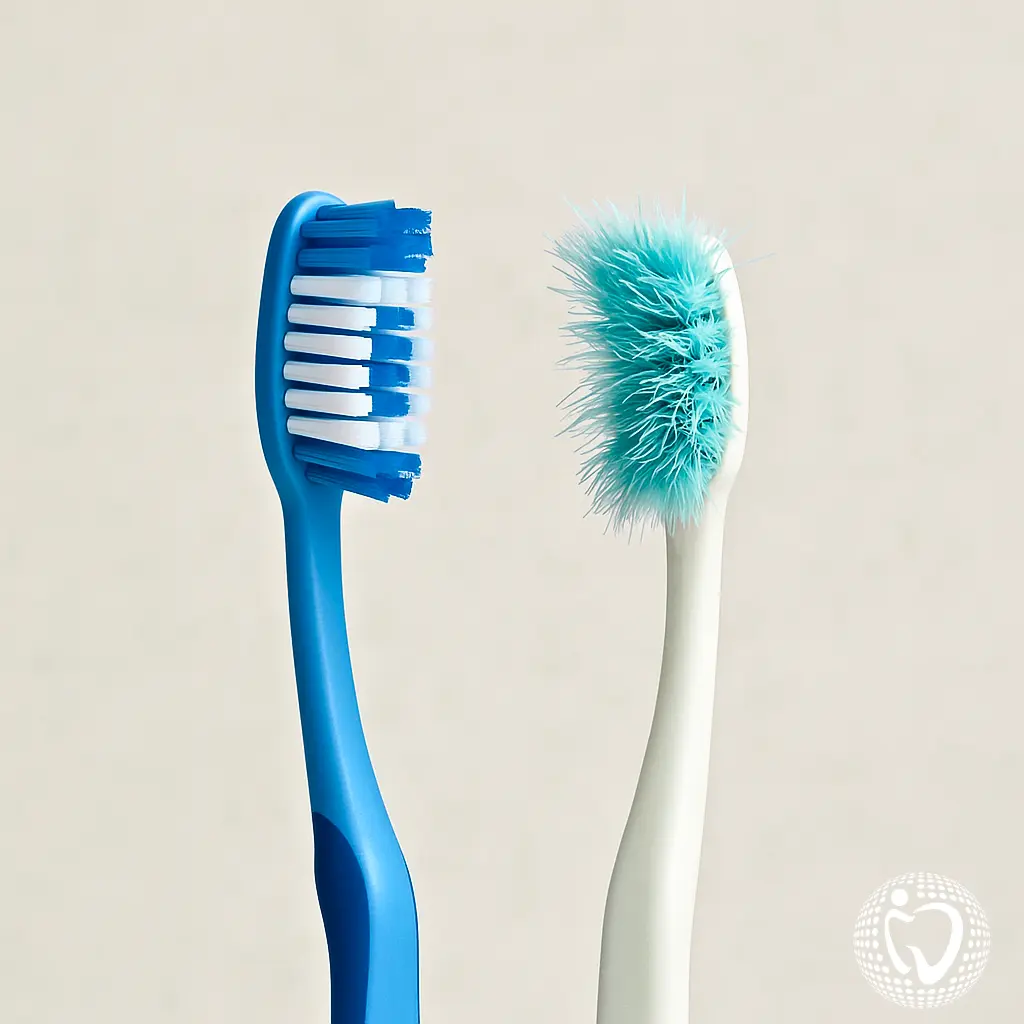
Quick Answer: How Often Should You Change Your Toothbrush?
Replace your toothbrush (or electric brush head) every 3–4 months. Replace it sooner if the bristles are frayed, the brush looks worn, or it’s been contaminated (dropped on a dirty surface).
Decision Table
| Situation | What to do | Why it matters |
|---|---|---|
| Normal use | Every 3–4 months | Bristles lose shape and cleaning power over time. |
| Bristles frayed / splayed | Replace now | Less plaque removal, more gum irritation risk. |
| After illness (flu, sore throat, oral infection) | Often replace | Many clinicians recommend it as a simple hygiene step after recovery. |
| Braces / aligners or you brush hard | 2–3 months | Brushes wear faster and plaque can build up easier. |
| Kids | Every ~2–3 months | Biting/chewing and inconsistent technique wear bristles faster. |
| Electric toothbrush head | Every ~3 months | Heads wear out too, even if damage isn’t obvious. |
Why the “3–4 Month Rule” Works
This rule is practical because most toothbrushes show meaningful wear within this window:
- Bristles soften and bend, reducing plaque removal.
- Brush heads trap debris more easily, especially if stored damp.
- Worn brushes can irritate gums, especially with heavy pressure.
5 Clear Signs You Need a New Toothbrush
1) Bristles flare outward (splaying)
If the bristles no longer stand straight, cleaning becomes less effective.
2) The brush feels “less effective” (plaque film remains)
If you’re brushing well but teeth still feel fuzzy, the brush may be past its best.
3) You brush hard and the head wears quickly
Frequent wear is often a sign of too much pressure. Consider a soft-bristled brush and lighter force.
4) The brush was contaminated
Dropped onto a dirty surface, stored in a closed container while wet, or shared by mistake? Replacing is the safest choice.
5) You’ve had recent dental work or gum inflammation
If gums are tender/bleeding, a fresh soft brush and correct technique can help—while you address the underlying cause.
After Illness: Should You Replace Your Toothbrush?
Many dentists recommend replacing your toothbrush after you recover from a contagious illness (like flu or a throat infection) as a simple hygiene step. Some evidence suggests reinfection from a toothbrush is not always likely (especially for strep), but replacement is low-cost and reasonable—particularly if you have a weaker immune system or recurrent infections.
Kids: How Often Should You Change a Child’s Toothbrush?
Kids often chew bristles, brush at odd angles, and wear brushes faster. A good rule is every 2–3 months—or sooner if the brush looks worn.
Electric Toothbrush Heads: Replacement Timing
Electric toothbrush heads should be replaced about every 3 months. Even if the head looks “okay,” bristles can lose stiffness and cleaning performance over time.
Choosing the Right Toothbrush (Quick guide)
- Go soft for most people (safer for gums and enamel).
- Use a small head if you have a narrow mouth or struggle to reach back teeth.
- If you brush hard, consider an electric brush with pressure sensor.
Storage & Hygiene Tips (Small changes, big payoff)
- Store upright and let it air-dry between uses.
- Avoid keeping a wet brush in a closed case for daily home use.
- Don’t let family toothbrushes touch each other in the holder.
- Replace after obvious contamination (dirty surface, mix-up, etc.).


